
Can you live a normal life with diabetic retinopathy?
Diabetes is a long-term condition where the body is unable to properly regulate blood sugar levels. As of 2022, around 830 million people worldwide are living with this disease, with the majority being the low- to middle-income population. If poorly controlled, diabetes can lead to complications that affect other organs like the eyes and kidneys.
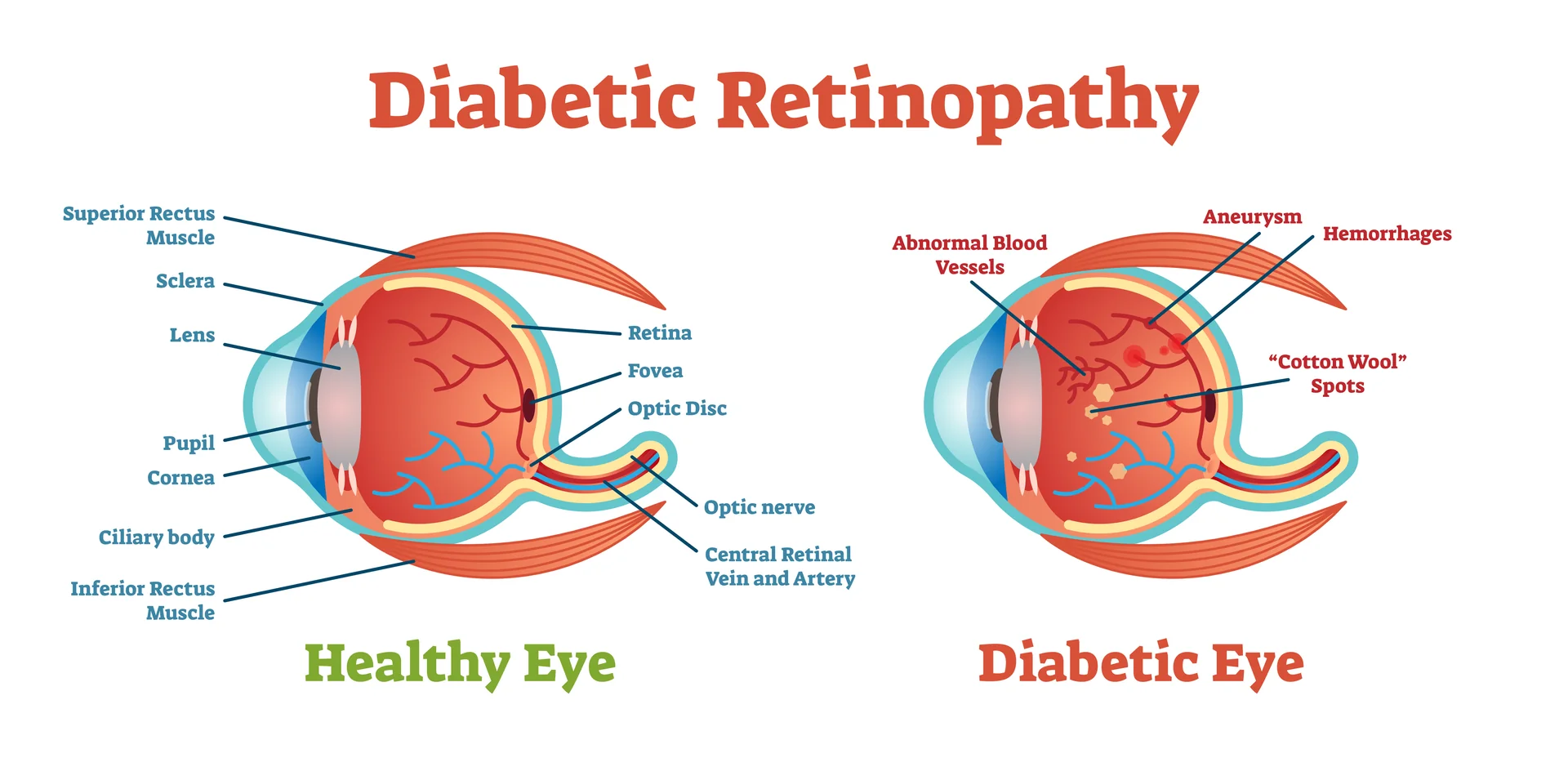
Diabetic retinopathy (DR) is one of the complications of diabetes and is also one of the leading causes of vision impairment, with around 3.9 million people being affected. The retina, which is the light-sensitive layer of the eye, is supplied with many blood vessels to carry out exchange of by-products. In individuals with poor diabetic control, this can adversely affect the quality of vision and internal structures of the eye.
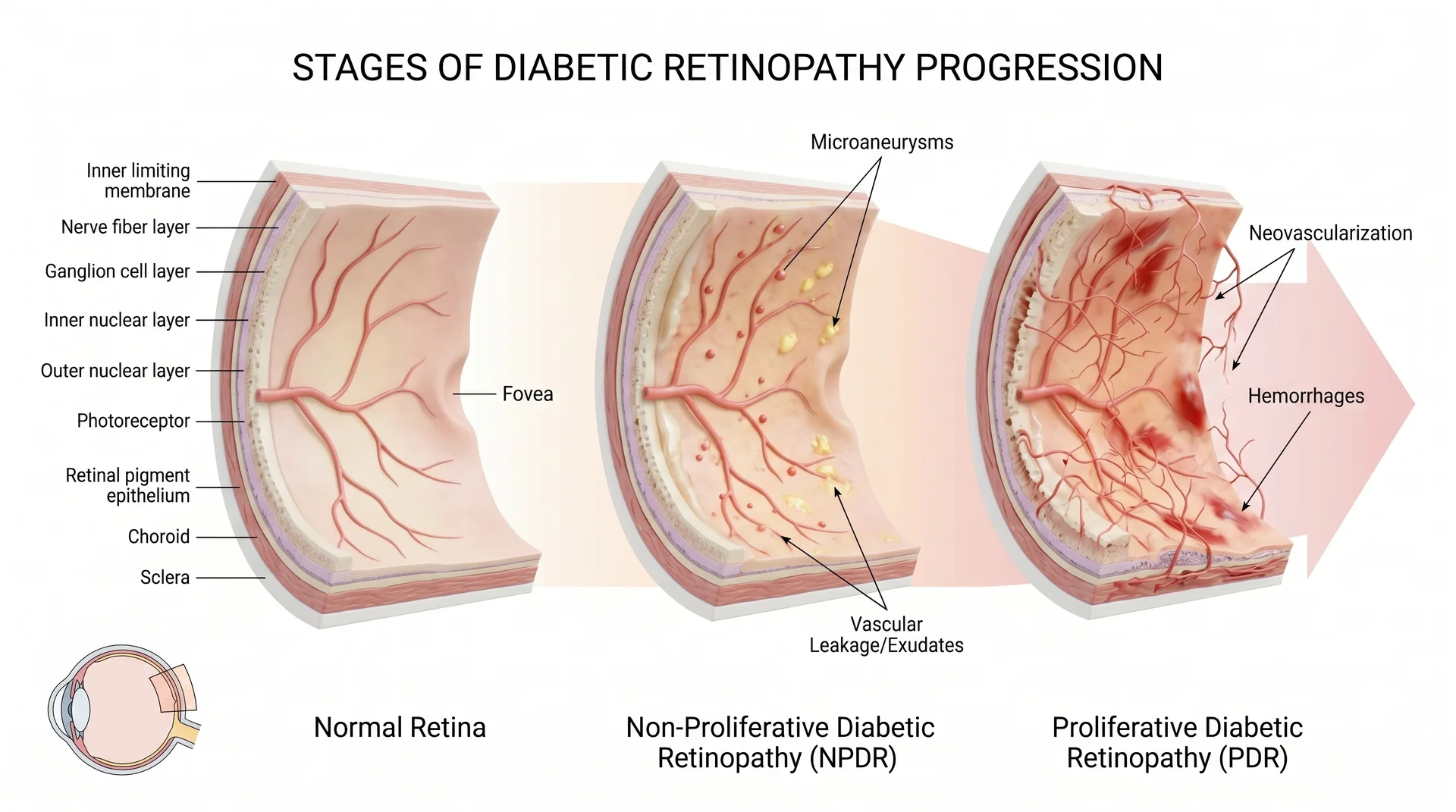
There are 2 main stages of DR:
- Non-proliferative diabetic retinopathy (NPDR)
Known as the early to moderate stage, this is often easier to tackle. With proper blood sugar management, this condition can be well controlled and maintained with minimal visual disturbances.This stage is characterised by the weak and leaky blood vessels that may leak fluids into the retina. As a result, visual disturbances may be noticed due to macula oedema (swelling of the macula) as this region is responsible for central vision. - Proliferative diabetic retinopathy (PDR)
In comparison, PDR occurs when new blood vessels grow due to the lack of proper oxygenation to the retina. This advanced stage presents itself with fragile and extremely leaky abnormal blood vessels, which are prone to bleeding into the vitreous space and cause vision changes such as blurred vision, sudden increase in floaters or worsening of vision. If there is an excess of blood leakage into the vitreous, this becomes vitreous haemorrhage, which in the long run may cause tractional retinal detachment due to the scar tissue formation left behind by the bleeding.
Question, can you still live a normal life with diabetic retinopathy? Yes and no.
Yes, provided that the disease is detected early, alongside with having good blood sugar, blood pressure and cholesterol levels, with regular eye examinations.
No, if the disease is more advanced and there is poor control of blood sugar, blood pressure and cholesterol levels, and also infrequent eye examinations. In such cases, there is a high chance that daily life may be affected due to blurry or fluctuating vision, floaters etc.
Common symptoms of diabetic retinopathy
Blurred vision: Occurs when increased blood sugar levels cause fluid to move into the lens of the eye, altering its shape and affecting how light focuses on the retina.
Floaters: Leakage of blood into the vitreous space casts shadows onto the retina, which may be seen as floaters as the eye moves.
Distorted/patchy vision: Fluid accumulation at the macula causes a change in vision.
Most people with diabetes feel their vision is “fine” until it has progressed to an advanced stage. It is paramount to be on top of your blood sugar, blood pressure and cholesterol level management, as uncontrolled levels can lead to a myriad of other systemic issues, not just within the eye. Having a regular diabetic eye examination also helps to establish a timeline for the ophthalmologist to ensure the disease does not progress. In the case it does progress, early intervention and treatment can be recommended, and this will be beneficial in the long run.
There are many places in Singapore that offer diabetic eye screening – ranging from community health centres and family medicine clinics to private clinics. Individuals with newly diagnosed and pre-existing systemic conditions should go for regular eye screenings to ensure their ocular condition remains unaffected. For those with established ocular conditions, they should screen at scheduled intervals or have routine eye examinations.
Diabetic eye screening consists of a few components – history taking, vision check, dilation of the eyes, retinal scan and detailed retina check by the ophthalmologist. History of each patient will be asked to note on any risk factors like their personal medical history. A vision check will be conducted as a baseline to ensure there are no sudden changes for future visits. After that, dilation eyedrops will be instilled to enlarge the pupils and allow a wider examination of the entire retina. A 3D retinal scan will also be photo-documented to pick up any abnormalities to ensure they do not progress.

During the consultation with the ophthalmologist, he/she will perform a detailed examination of the retina to ensure there are no tears/holes/breaks and to also assess the severity of the diabetic retinopathy. Test reports, examination findings and the patient’s history will be taken into account by the ophthalmologist, and they will recommend the most appropriate plan – if regular follow-up is sufficient or a more aggressive management plan is required.
Also Read: Understanding the Impact of Diabetes on Your Eyes
Final thoughts
If you are diabetic and especially if the condition is poorly controlled, it is prudent to seek a diabetic eye screening with a trusted ophthalmologist.
To schedule an appointment, please contact Eye Max Centre at +65 6694 1000 or manager@eyemax.sg.
