
Should I go to the A&E for a detached retina?
Before rushing to the A&E for a suspected detached retina, it is important to understand what a retinal detachment is and whether symptoms such as flashes of light, new floaters, or a dark shadow in your vision are serious enough to require urgent medical attention. Many people are unsure whether they should go straight to the A&E, contact an eye specialist, or wait to see if the symptoms improve.
In this article, we will explain the warning signs that require urgent assessment, what happens if it turns out to be a retinal tear or retinal detachment, the available treatments for retinal detachment, and what to expect during an urgent eye examination.
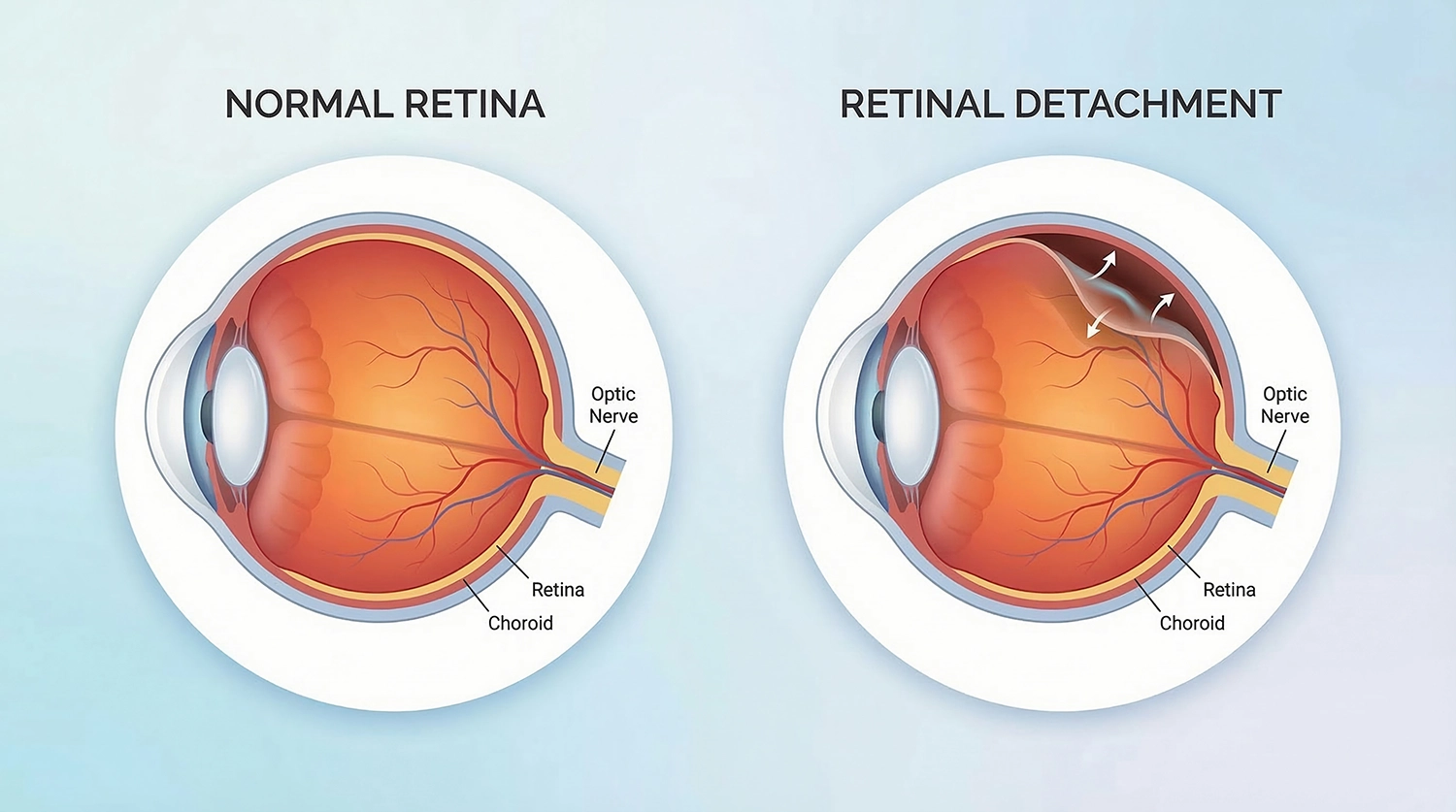
What is a retinal detachment?
Retinal detachment is a serious eye disorder in which the retina (a thin, light-sensitive layer at the back of the eye) pulls away from its normal position. It is different from a retinal tear. A retinal tear is a break in the retina itself, while a retinal detachment occurs when the retina lifts and separates as fluid passes through the tear or other defects.
In many cases, a retinal tear may be treated early with laser treatment to seal it and prevent progression. However, if the retina becomes detached, surgery is usually needed to reattach it and prevent the vision from worsening.
What symptoms require urgent medical attention?
If you experience any of the following symptoms that may indicate a serious retinal condition, you should seek immediate medical attention:
- Sudden increase in floaters (in the hundreds or thousands)
- Flashes of light
- A curtain, shadow or dark area in vision
- A sudden worsening of vision
These symptoms may be signs of a retinal tear or retinal detachment. Early diagnosis and treatment are essential to help prevent permanent vision loss.
Should I go to the A&E, an eye specialist or both?
Opting for the A&E is appropriate if symptoms are severe, develop outside regular clinic office hours, or if you are unable to see a retinal specialist promptly. In these situations, A&E is the immediate route when a retinal specialist appointment is unavailable.
A same-day appointment with a retinal specialist is a good option if you are able to contact a retinal clinic and get an urgent consultation appointment.
Some people may consider “waiting to see if symptoms improve”. However, delaying assessment can be risky because conditions such as retinal tears or retinal detachment may progress over time, leading to potential irreversible vision loss.
What happens if it is not a retinal tear?
If the examination shows an area of retinal thinning or degeneration rather than a retinal tear, preventive laser treatment may be recommended. During the laser procedure, laser spots are applied around the affected retinal area to create a protective barrier. This helps prevent fluid from passing through the weakened area of the retina and reduces the risk of retinal tears and retinal detachment.
Even if a retinal tear is not detected initially, urgent assessment remains important because an early retinal tear can be very small or difficult to identify at the initial stage. Without timely diagnosis, a potential retinal tear may enlarge and allow fluid to seep underneath the retina, increasing the risk of retinal detachment. Prompt diagnosis by a retinal specialist ensures appropriate management, including preventive laser treatment. Some people require close follow-up reviews as a retinal tear may develop days or weeks after the onset of symptoms.
What happens if it is a retinal detachment?
If a retinal detachment is diagnosed by a retinal specialist, urgent and immediate treatment are required. Without timely intervention, more of the retina may detach, significantly increasing the risk of irreversible vision loss or blindness.
Retinal detachment surgery sources in Singapore commonly discuss vitrectomy and scleral buckle as standard treatment approaches. The type of surgery recommended will depend on several factors, including the location, extent and severity of the retinal detachment, as well as the condition of the vitreous gel.
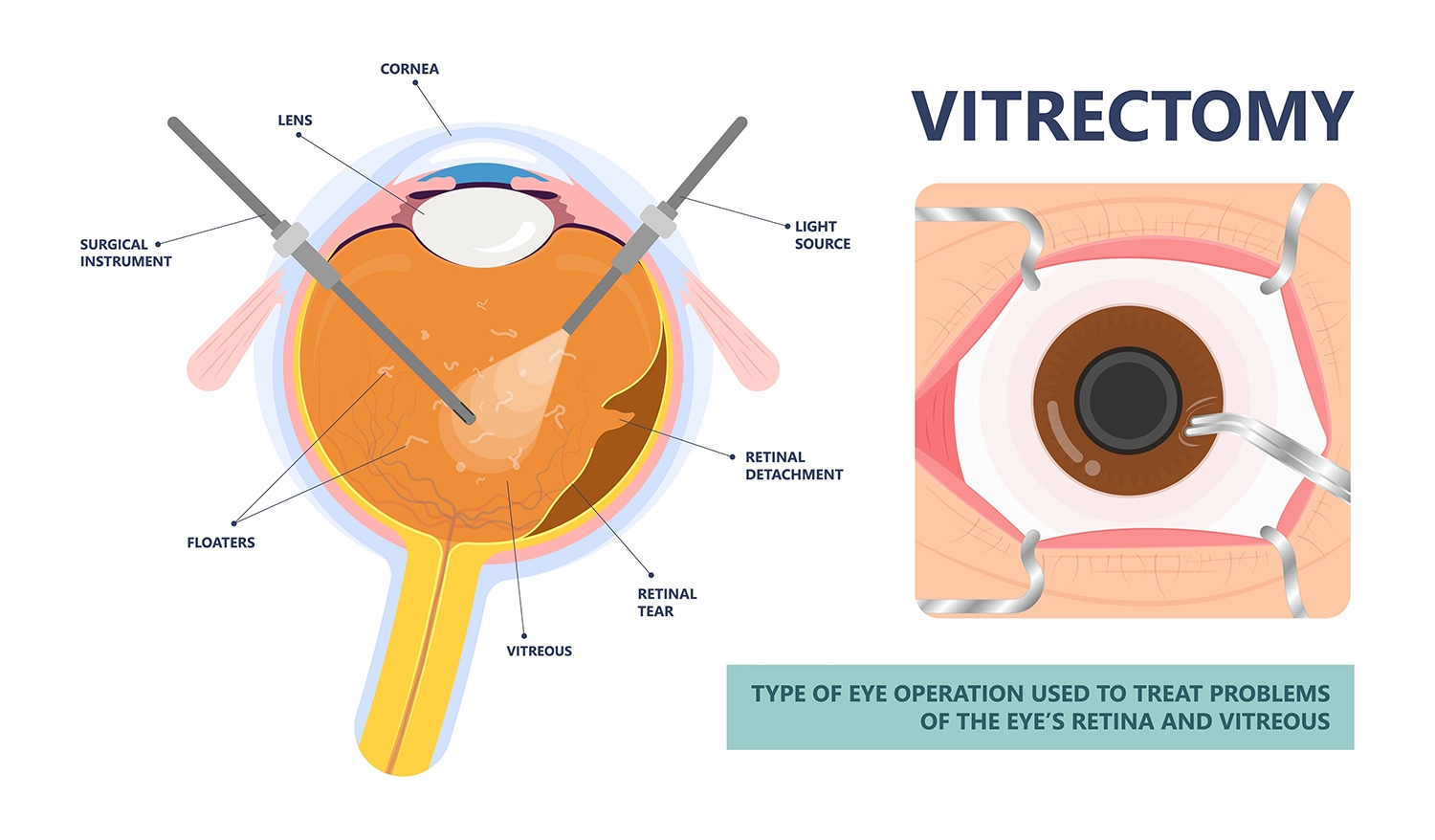
Vitrectomy
Vitrectomy is a microsurgical procedure in which the retinal specialist makes tiny incisions in the white of the eye (sclera) and removes the vitreous gel to relieve traction on the retina. After the vitreous gel is removed, additional treatments such as laser therapy, cryotherapy (freezing treatment), or membrane peeling may be performed to repair the retina and address the underlying condition.
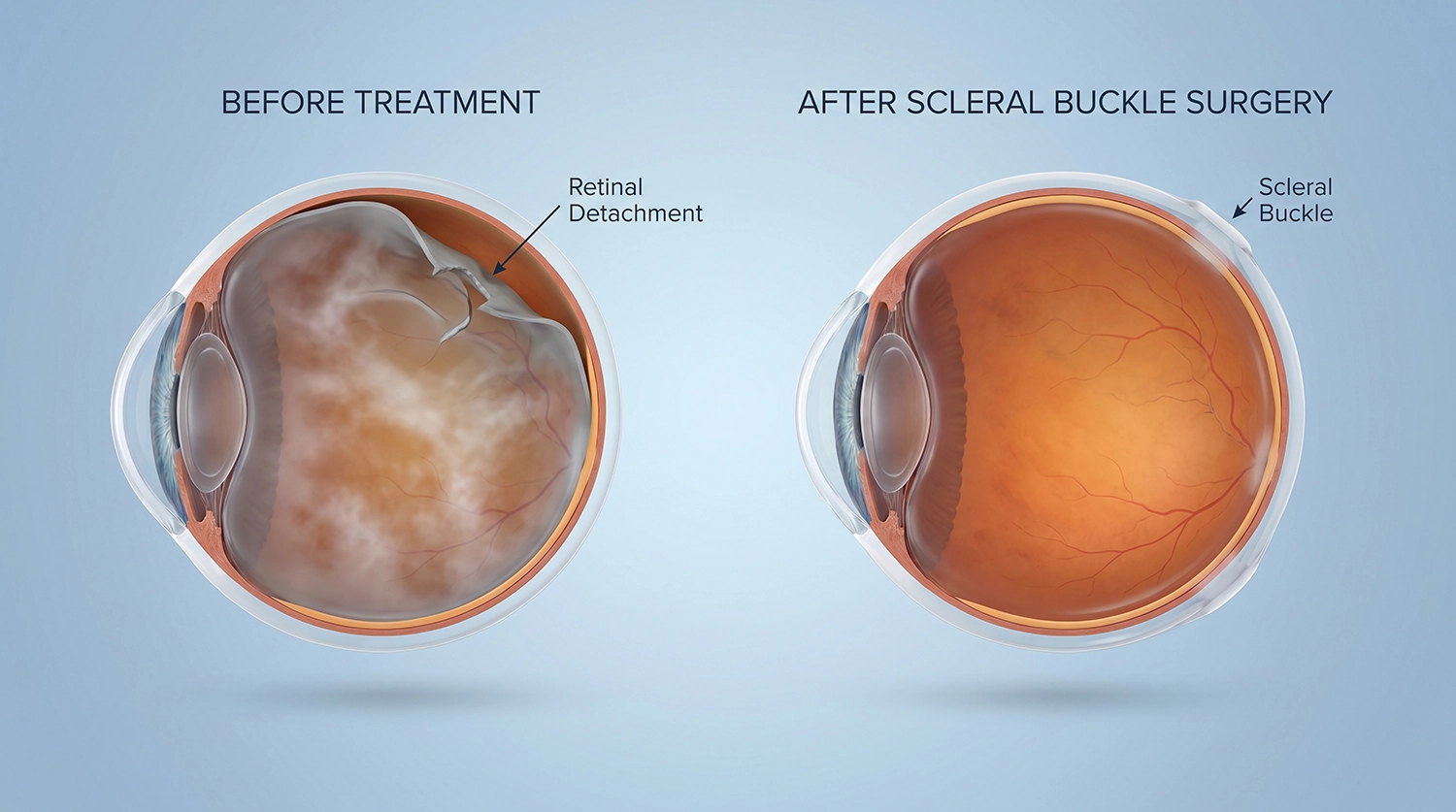
Scleral buckle
The scleral buckle is a silicone band sewn onto the outer wall of the eye (sclera), beneath the eye muscles. The buckle is fastened to support the retinal tear that is causing the retinal detachment. The buckle gently pushes the eye wall inwards, creating an indent in the eyeball that reduces the abnormal internal pressure of the vitreous gel on the retina. This allows the detached retina to come into contact with the eye wall and reattach. To seal the tear’s edges, laser treatment or freezing (cryotherapy) of the retina is used.
Gas or oil tamponade
A gas or oil tamponade is often used during retinal detachment surgery to help keep the retina in place while it heals. At the end of the operation, a small bubble of gas or silicone oil is placed inside the eye to gently press the retina against the eye wall and support reattachment. The gas bubble is gradually absorbed by the body over time, while silicone oil usually needs to be removed with a second surgery when the retina has healed. The choice between gas and oil depends on the severity of the detachment and the surgeon’s recommendation.
At the conclusion of surgery, either synthetic gas or synthetic oil (silicone oil) may be used to fill the eye to keep the retina in place while it heals. Gas bubbles are gradually absorbed by the body over a period of 2 weeks to 2 months and is replaced by natural fluid produced by the eye. Silicone oil, on the other hand, will require a second surgery to remove after the retina has healed.
What not to do if you suspect you may have a retinal detachment?
If you suspect a retinal detachment, it is important to take prompt action rather than delaying. With early diagnosis and timely treatment, in most cases, the retina can be successfully reattached. Do not drive if vision is badly affected for safety reasons. Waiting for an appointment is not recommended, as retinal detachment is a serious condition that requires urgent medical attention. Lastly, you should not assume that new floaters are always harmless because they may be an early sign of a serious retinal issue that needs immediate assessment and treatment.
What to expect at the urgent assessment?
A comprehensive eye examination at an urgent assessment usually includes a dilated retinal exam, which allows a retinal specialist to evaluate the retina for tears, detachment or other underlying retinal abnormalities. If needed, additional retinal imaging such as Optical Coherence Tomography may be performed to provide a more detailed assessment for an accurate diagnosis.
If urgent treatment is required, the retinal specialist will discuss the recommended treatment options. Depending on the severity of the diagnosis, same-day surgery may be necessary to prevent further vision loss.
Retinal eye screening
To schedule a retinal eye screening, please contact Eye Max Centre at +65 6694 1000 or manager@eyemax.sg.
