
Can cataract surgery correct high myopia in Singapore?
In Singapore, high myopia is becoming more common and is linked to a higher risk of cataracts and other eye diseases. In fact, research has shown that people with high myopia might start developing cataracts up to 10 years earlier and may experience symptoms earlier as well than those with low, moderate, or no myopia.
Many people might be questioning if high myopia can be corrected with cataract surgery. The degree of correction varies from person to person and is influenced by things like lens choice, retinal health, and eye anatomy.
For people with myopia, cataract surgery not only can replace the cloudy lens in the eye, but it can also help reduce dependence on glasses using intraocular lenses.
Why may highly myopic eyes have other eye risks?
High myopia, also called severe short-sightedness, is typically defined as a prescription of 600 degrees or higher.
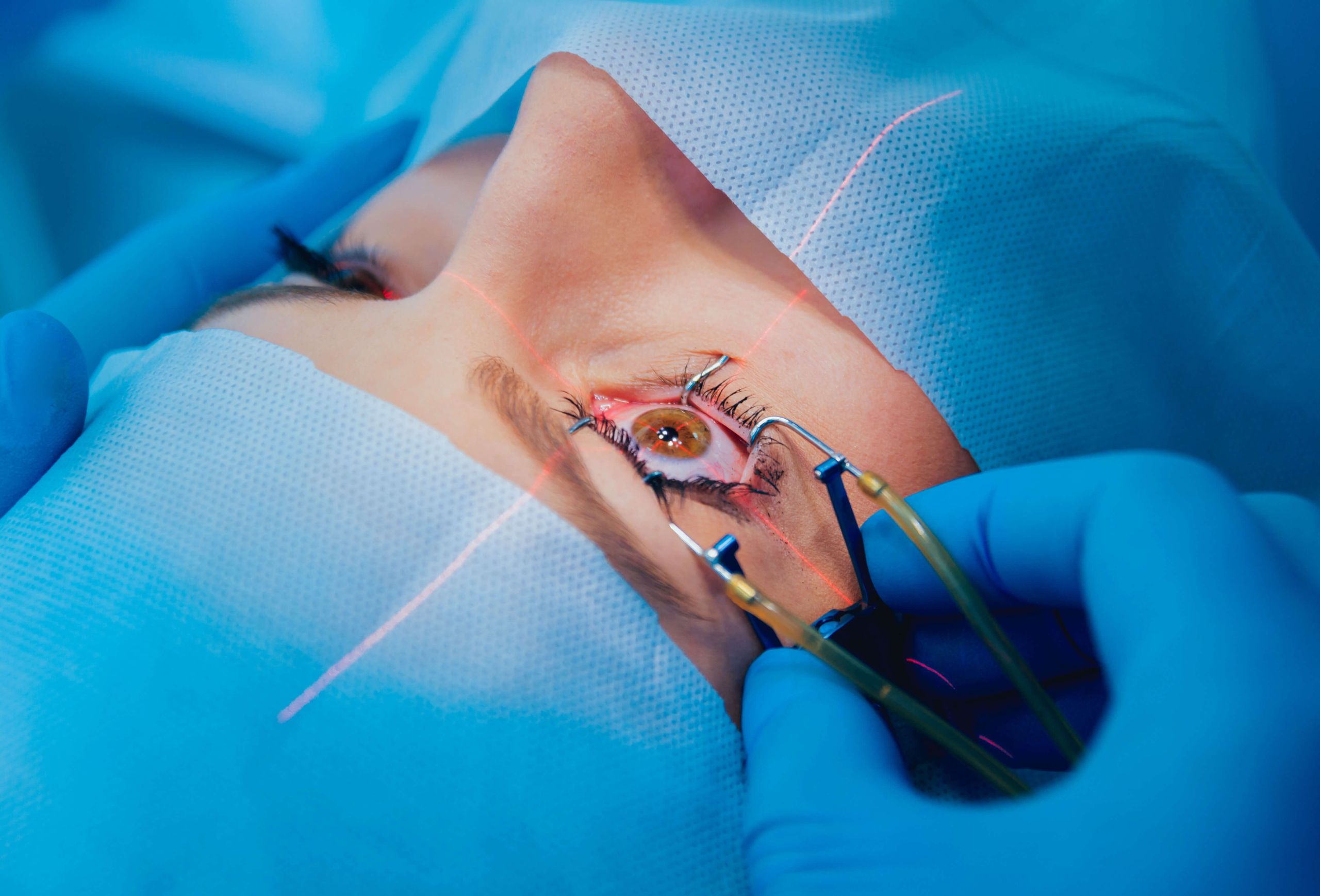
In people with high myopia, the eyeball is stretched out and elongated, making the retina (the back part of the eye) and other internal parts of the eye thinner. Retinal tears, which may result in retinal detachments, glaucoma, and myopic macular degeneration, are among the eye conditions that are more likely to occur as a result.
Retinal detachment is a condition where the retina, which is the layer that lines the back part of the eye, separates from the wall of the eye. This occurs when the eye is stretched over a much larger surface area; the retina thins out, becoming more fragile and more prone to getting holes or tears. The older you get, the more the retina thins out, and fluid from inside the eye can enter the hole or tear and lift it off the wall of the eye, causing a retinal detachment.
High myopia also increases the risk of myopic macular degeneration, a condition that affects the central part of the retina known as the macula. The internal surface area of the eye is larger, causing the retina to be thinner and look prematurely aged. This is called macular degeneration, and it happens to myopic people at a younger age. This is not age-related but due to the pathological processes involved in myopia. When compared to a normal eye with a thicker retina, it takes less trauma to cause damage in a highly myopic eye.
Before cataract surgery, it is often recommended to get a complete retinal exam to identify any underlying problems that may need treatment before or after the removal of cataracts, which may influence the eye surgeon’s surgical planning.
How does cataract surgery change the eye’s focusing power?
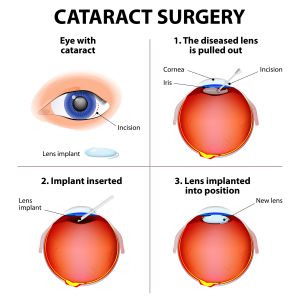
During cataract surgery, the cloudy lens in the eye is removed and replaced with an artificial intraocular lens (IOL). The power of this implanted lens is carefully measured and calculated before the surgery to optimise the vision outcome.
By selecting an appropriate lens power, your eye surgeon is able to reduce high myopia and also astigmatism. This explains why most high myopes notice a significant improvement in their vision after their cataract surgery.
Why do some people still need glasses after surgery?
Despite successful cataract surgery, some people may still need glasses.
Whether you need glasses after surgery depends on the type of intraocular lens chosen for cataract surgery. Some may have achieved good distance vision but still require reading glasses for near tasks. Others may have residual astigmatism, which can affect how sharp the vision is.
Specifically for highly myopic eyes, lens power calculation can be more challenging due to their longer axial length. The accuracy has been improved over the years with new modern imaging and calculation, but careful pre-operative measurement and considerations by your eye specialist are still important.
What lens options are available for cataract surgery?
Monofocal lens
The most commonly implanted IOL during cataract surgery is a monofocal lens. It allows you to see clearly at a single focal distance, usually for far distance, which means reading glasses will be required for near tasks.
Some people may opt for monovision, one eye to see far and the other to see near. This will give you a spectacle-free lifestyle, as you will be able to see both distance and near using both eyes for most activities. It usually takes a few months for the brain to adjust to monovision.
Before having cataract surgery, it is important to go over the pros and cons of monovision with your eye specialist.
Multifocal lens
A trifocal lens is a type of multifocal lens, designed to provide a wider range of vision, allowing people to see well enough for far, intermediate and near distances, reducing the need for glasses after cataract surgery.
However, a trifocal lens is not for everyone if there are existing eye conditions, including retinal or corneal diseases, that can affect the quality of vision after surgery.
For high myopes, your eye specialist will carefully assess the overall health of your eye before deciding whether a multifocal lens is a suitable option.
Toric lens for astigmatism
If you have astigmatism, where your cornea has an irregular curve causing blurred vision, you may opt for a toric lens. In addition to correcting your myopia, a toric lens is also able to correct astigmatism, which may improve the overall visual quality.
Also Read: Cataract Surgery Cost in Singapore: MediSave & Insurance Guide
How does lens choice affect spectacle independence?
The choice of IOL plays an important role in determining how much you need to rely on glasses after surgery. Different lenses will mean different compromises between your range of focus, overall visual quality, and trade-offs.
The level of spectacle independence depends on factors such as eye health, lifestyle needs, and the type of lens implanted. You may discuss with your eye specialist which is the most appropriate and suitable option.
Special considerations in highly myopic eyes
Retina assessment before surgery
Since highly myopic eyes are more likely to have retinal problems, a detailed retinal examination is usually done before cataract surgery to ensure that any existing retinal problems can be diagnosed and managed accordingly prior to cataract surgery.
Risk of retinal tears or detachment after surgery
People with high myopia have a higher lifetime risk of retinal tear or retinal detachment as compared to people with mild to moderate or no myopia. Cataract surgery is generally considered safe, but some warning signs to watch out for are sudden flashes, new floaters, or shadow or curtain vision. If you notice any of these, you should consult an eye specialist immediately.
When should you see a cataract surgeon?
Cataracts are generally considered an age-related disease, but people with high myopia are susceptible to early cataract development.
You may want to consider seeing a cataract eye specialist if you notice:
- more blurry or cloudy vision
- more glare from lamps or the sun
- double vision
- you are having trouble driving at night because the headlights seem too bright
- your glasses are not giving you clear vision even with an updated prescription
Conclusion
Cataract surgery can often help with high myopia by restoring clear vision, and with the choice of an appropriate IOL, this can mean less reliance on glasses post-surgery.
An accurate pre-operative evaluation and individualised surgical planning are especially important for those with high myopia. An eye specialist can help you determine if you are suitable for surgery and can recommend the best lens options for your vision needs and lifestyle goals.
To schedule a cataract screening, please contact Eye Max Centre at +65 6694 1000 or manager@eyemax.sg.
References:
- https://www.frameandfocuseyecare.com/the-connection-between-myopia-and-eye-health-risks-of-high-myopia/
- https://www.healthhub.sg/health-conditions/cataract_nuh
- https://www.nuh.com.sg/health-resources/diseases-and-conditions/cataract
- https://www.mykidsvision.org/fr-FR/knowledge-centre/the-risks-of-high-myopia#eye-conditions-associated-with-high-myopia
- https://www.aao.org/eye-health/diseases/cataracts-iol-implants https://www.brimhalleyecenter.com/cataracts/correcting-high-myopia-with-cataract-surgery-lens-power/
- https://www.myopia.com.sg/2020/08/25/the-perils-of-high-myopia/
