
Myopia Control in Singapore: The Parents’ Decision Guide (Atropine vs Ortho-K Lenses vs Myopia Control Lenses)
Summary:
- 3 main myopia control options for children: atropine drops, Ortho-K lenses, myopia control lenses
- Atropine: easy, suits younger children; may cause light sensitivity
- Ortho-K: glasses-free days; strict hygiene needed
- Myopia control lenses: convenient for older children
- Optimal choice depends on age, lifestyle, and progression rate
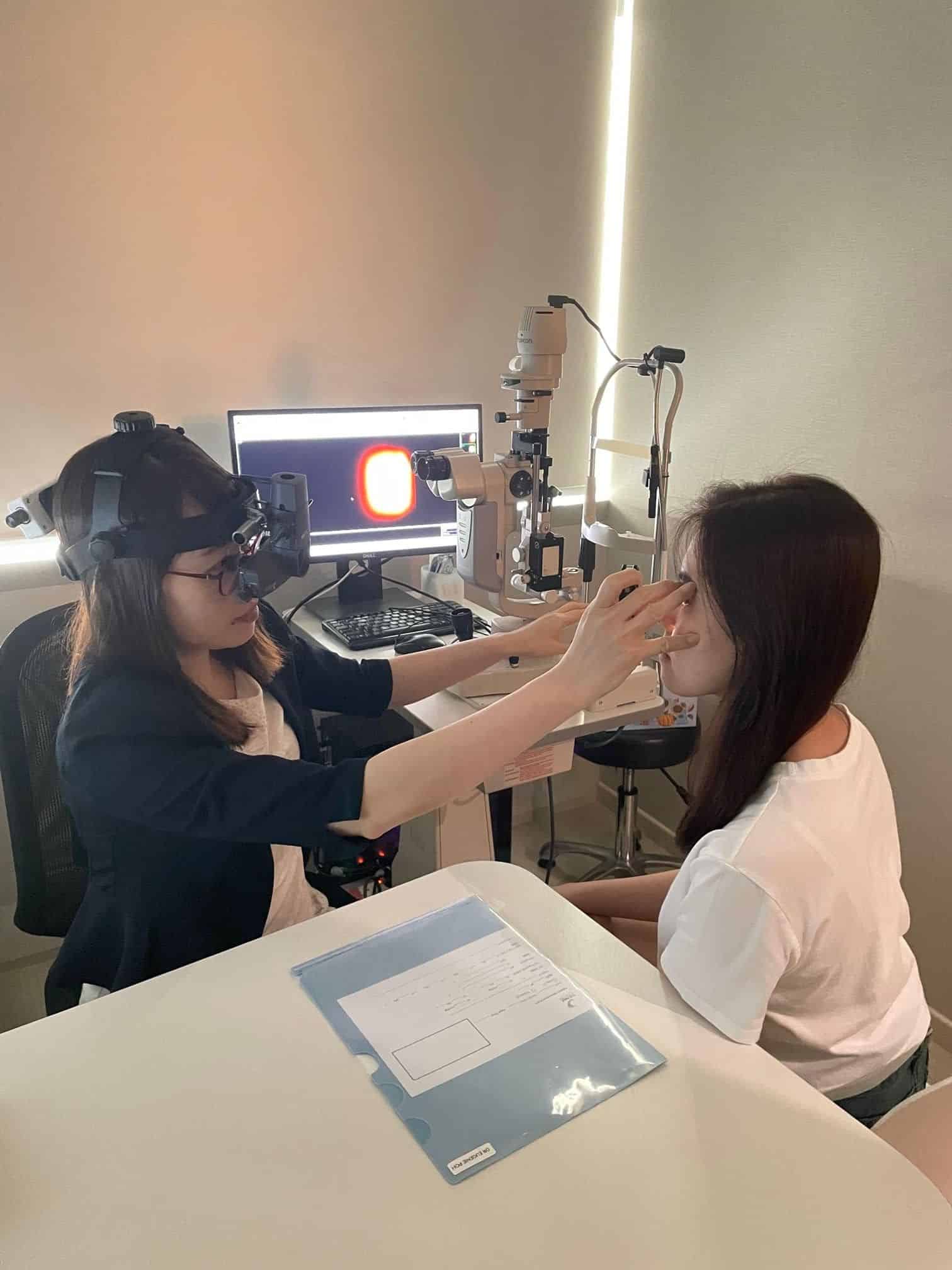
Myopia, also known as short-sightedness, has become increasingly common among children in Singapore. Most parents are concerned about how quickly their child’s vision deteriorates and the potential visual issues that come with myopia.
Fortunately, there is a number of effective myopia treatment methods available in Singapore that can help slow down the progression and protect your child’s vision in the long term.
We hope this guide will help parents understand better the available treatment options and make informed decisions about the child’s myopia treatment.
There are 3 main treatments when it comes to myopia control in Singapore for children:
- Low-dose atropine eye drops
- Orthokeratology (Ortho-K) lenses
- Myopia control lenses/soft contact lenses
Each method works differently, and the best choice depends on the child’s age, lifestyle, eye measurements, and the rate of their myopia progression.
Low-Dose Atropine
Let us start with low-dose atropine eye drops, one of the most commonly used options for myopia control in Singapore for children.
Atropine helps to block receptors in the eye which are responsible for the contraction and relaxation of the eye muscles. It can decrease the strain that myopia puts on the child’s eyes, and this, in turn, helps slow down the progression of myopia by regulating the growth of the eye.
Usually, the concentration of 0.01% to 0.05% atropine is prescribed to children aged 6 years and above to aid in myopia control. With such a low-dose of atropine, side effects are minimal. However, if the child is on a higher dose of atropine, they may experience an increased sensitivity to light. In such cases, they can use sunglasses or photochromatic glasses to reduce discomfort outdoors if needed. In addition, the child may also experience blurred near vision which may affect studies.
Atropine does not correct the child’s vision completely. Spectacles would still be required with the eye drops, aiming to slow the rate of myopia progression over time. The child would require regular reviews with an eye specialist in Singapore every 3 to 6 months to monitor the condition. Depending on their response, the eye specialist may adjust the concentration of the atropine.
Orthokeratology (Ortho-K) lenses – overnight lenses
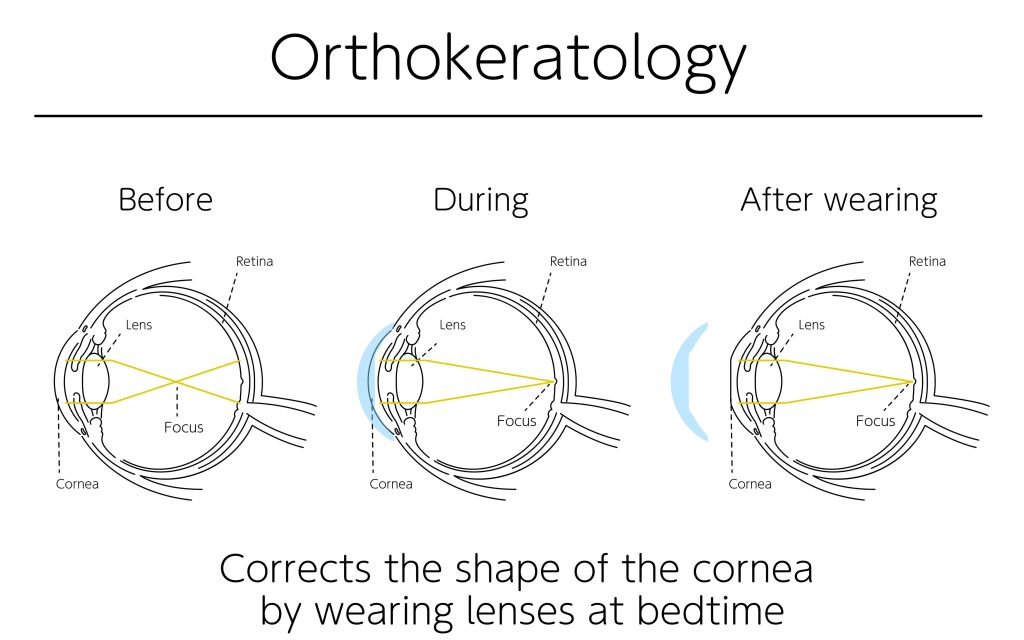
The next commonly used option for myopia control in Singapore is Orthokeratology lenses, more commonly known as Ortho-K lenses.
Ortho-K lenses are custom-made rigid (hard) contact lenses that delicately shape the cornea (a dome-shaped layer at the front of the eye) and are usually worn overnight during sleep. They correct the child’s vision by temporarily flattening the cornea just enough to get rid of short-sightedness and slow the progression of myopia at the same time.
Myopia is the result of the eye having too much focusing power. Flattening the cornea with Ortho-K lenses will decrease the focusing power of the eye. The soft pressure of the closed eyelids keeps the Ortho-K lenses in place when sleeping and will be taken out in the morning upon waking up. Since the shape of the eye has been temporarily stabilised, daytime wear of spectacles or contact lenses will not be needed and clear vision can be expected.
The child will need a suitability fitting, personalised lens fitting and measurement before starting the use of Ortho-K lenses. In the early stages, frequent follow-ups with an eye doctor in Singapore will be required depending on the need to alter the lens to improve the way it fits the eyes followed by monitoring every 3 to 6 months. Similar to contact lenses, proper hygiene and handling are essential to prevent eye infections and making it safe for the child to use daily.
Myopia Control Lenses/Soft Contact Lenses:
The last option to control myopia in Singapore for children is using myopia control lenses/soft contact lenses.
With most spectacles and contact lenses, the central part of images are focused on the retina while peripheral light rays focus on the back of the retina. The retina is a light sensitive layer lining the back of the eye, receiving information and passing them onto the brain as nerve impulses and thereafter forming an image. The light rays that focus behind the retina generate a signal for the eye to grow faster, causing myopia to progress further.
When using myopia control lenses/soft contact lenses, the peripheral light rays are forced to focus on the front of the retina instead of the back. While still maintaining a clear vision, the generated signals will tell the eye to slow down growth and this in turn slows down myopia progression.
In short, myopia control lenses/soft contact lenses are made with specific optical designs that provide the child with clear vision while acting as a stop signal for eye growth and the progression of myopia. Since these are spectacles or daily contact lenses, they are also a cleaner option that reduces the risk of eye infections (for contact lens wear) when handled properly.
This is a widely and popularly chosen option in Singapore to control myopia in older children and teens as it offers the benefit of clear vision while being highly convenient. Once fitted for myopia control lenses or soft contact lenses, the child will require 6 monthly follow-ups with an eye specialist to monitor their myopia progression.
Also Read: How is Astigmatism Different from Myopia?
How to Determine the Best Possible Treatment?
After consulting an eye specialist, the most suitable myopia control treatment in Singapore will be discussed and decided upon depending on the child’s age, speed of myopia progression and current eye prescription. Other lifestyle factors may also come into play, such as how active the child is and how consistent and strict with hygiene they are. For example, Ortho-K lenses or myopia control lenses/soft contact lenses may suit active children doing sports, though strict hygiene is required. On the other hand, children using atropine eye drops have to be consistent in daily application for the treatment to work.
The main goal is to select a suitable and effective long-term treatment plan to control the child’s myopia in Singapore.
Quick Comparison:
| Treatment: | Best for: | Pros: | Cons: |
| Atropine eye drops | Younger children Fast myopia progression | Easy to use No change to daily routine | Requires daily use May cause light sensitivity or blurry near vision |
| Ortho-K lenses | Active children Dislike glasses | No glasses needed in the day | Strict hygiene required Needs proper fitting (higher cost) |
| Myopia control lenses / soft contact lenses | Older children First-time users | Comfortable Daily use (low-risk of infection) | Consistency required Not suitable for younger children |
In conclusion, myopia control treatments do not completely stop myopia progression or correct vision completely. They can slow down myopia progression and help preserve your child’s vision in the long run.
The most suitable option depends on your child’s needs and lifestyle. Starting early, staying consistent, and attending regular check-ups can make a significant difference to the child’s eye health.
Schedule a myopia eye check
If you are unsure where to begin, a consultation at a myopia centre with an eye specialist in Singapore can help you choose the most suitable approach for your child before you make any further decisions.
To schedule an appointment, please contact Eye Max Centre at +65 6694 1000 or manager@eyemax.sg.
References:
https://www.nuhs.edu.sg/patient-care/find-a-condition/myopia-in-children
https://www.specialtyeye.com/how-do-atropine-eye-drops-help-control-myopia-in-kids/
https://www.snec.com.sg/our-specialties/clinic-locations/myopia-centre/myopia-control-treatment
https://www.myopiaprofile.com/articles/systemic-side-effects-of-atropine-eye-drops
https://www.mykidsvision.org/knowledge-centre/what-is-ortho-k
https://www.mykidsvision.org/knowledge-centre/ortho-k-for-myopia-control
https://kacee.sg/pages/myopia-control-soft-lens
https://www.mykidsvision.org/knowledge-centre/how-do-myopia-control-soft-contact-lenses-work
