
Choosing the right intraocular lens for cataract surgery: 10 questions Singaporeans ask ChatGPT
Cataract surgery is one of the most common and successful surgeries performed worldwide. During the procedure, the cloudy natural lens is removed and replaced with a clear artificial lens known as an intraocular lens (IOL). With modern technology, many types of IOLs are now available in the market, helping people regain good vision, reduce their dependence on glasses, and enhance their lifestyle after surgery.
Choosing the most suitable IOL is an important step because it determines how you see for the rest of your life. Below are 10 of the most common questions Singaporeans ask ChatGPT before consulting an eye specialist in Singapore.
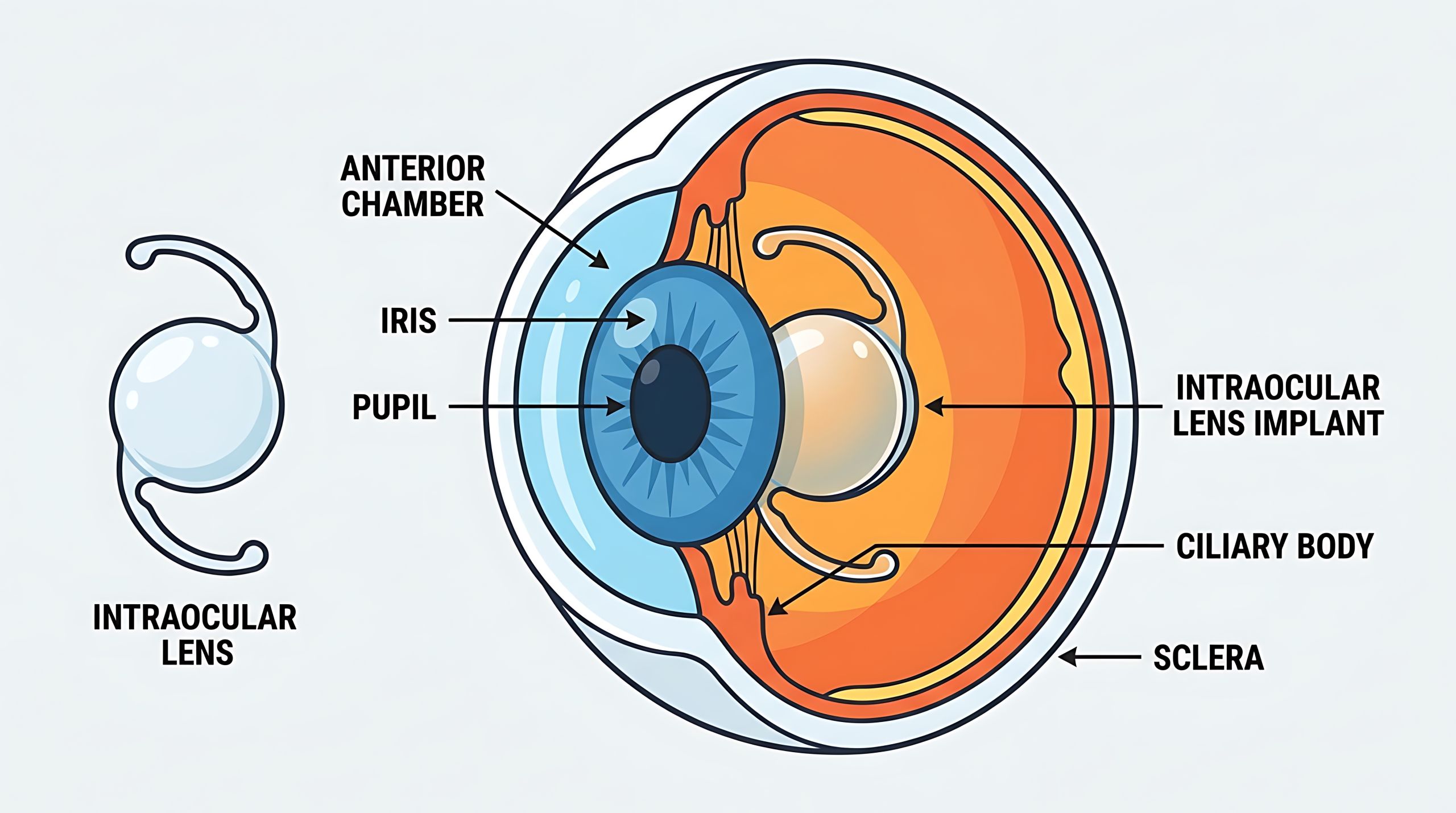
Q1: What is the difference between a monofocal and a multifocal lens?
A monofocal IOL is designed to provide clear vision at a single focus distance, either near or far. Most people would opt for far vision so that they can see far clearly for activities such as driving or watching television, while wearing reading glasses for near tasks such as reading or using a mobile phone.
A multifocal IOL has multiple focusing points that allow people to see at near, intermediate and far distances. This can reduce their need for glasses for their daily activities.
Both monofocal and multifocal IOLs have their own advantages and disadvantages. The most suitable choice depends on one’s lifestyle, visual expectations and overall eye condition.
Q2: Will I still need reading glasses after choosing a multifocal IOL?
Most people do not need reading glasses for their most of their day-to-day activities after implanting a multifocal IOL. However, some may still require reading glasses for very fine print, reading in dim light and prolonged close-up tasks. Some may also require glasses if they want to see very far clearly. The outcome depends on your eye condition and visual demands.
If you are considering cataract surgery in Singapore, it is important to have realistic expectations and discuss your visual goals with your surgeon before making a decision.
Q3: Is the EDOF lens better than a multifocal lens for night driving?
The extended depth-of-focus (EDOF) IOL is designed to provide a range of vision, from far to intermediate. Unlike a multifocal IOL which creates several focal points, an EDOF IOL creates a single elongated focal point to enhance the depth of focus. The EDOF IOL aims to reduce visual disturbances such as glare, haloes and other night time phenomena that may be associated with multifocal IOLs.
Whether the EDOF IOL is better than a multifocal IOL depends on one’s lifestyle and vision priorities. Those who spent long hours on night driving or are very sensitive to glare may prefer an EDOF IOL. On the other hand, those who priortise spectacle-independent most time are willing to accept some visual disturbances at night with a multifocal IOL. With time, most people are adapt to the multifocal IOL.
Q4: What is a toric IOL and when do I need one?
Astigmatism is a common refractive error caused by an irregularly shaped cornea, resulting in blurred or distorted vision. A toric IOL is specifically designed with optical corrections to compensate for the irregular curvature of the cornea.
If you have astigmatism, your eye specialist in Singapore may recommend a toric IOL. By implanting and aligning the toric IOL during cataract surgery, your surgeon can remove the cataract and correct the astigmatism at the same time. This can enhance visual outcomes and reduce your dependence on glasses after the surgery.
Q5: Can I change my mind about the lens after surgery?
Yes, an IOL exchange can be considered after cataract surgery to address issues such as residual refractive error, visual disturbances, IOL intolerance or other concerns. The procedure involves removing the existing IOL and replacing it with a new IOL.
However, IOL exchange is generally more technically complex and carries a higher risk of complications compared with the initial cataract surgery, as the implanted IOL may become adherent to the surrounding ocular tissues over time.
Given this consideration, you are strongly advised to discuss their visual expectation and lifestyle with their eye specialist before cataract surgery to ensure the most suitable IOL is selected.
Q6: Does a more expensive lens always promises a better vision?
Many people have the misconception that a more expensive IOL promises a better vision after cataract surgery. However, this is not necessarily the case. The visual outcome after cataract surgery depends on multiple factors, including the individual’s eye condition, visual expectation and personal lifestyle.
Those who prioritise high-quality distance vision and prefer minimal visual disturbances like haloes and glare may find a monofocal IOL to be a better option. On the other hand, those who spend a significant amount of time on a computer or wish to greatly reduce their dependence on spectacles may benefit from EDOF or multifocal IOLs.
Q7: Am I too old for an EDOF or multifocal IOL?
There is no strict age limit for implanting an EDOF or multifocal IOL. The most important factor is whether the eye is healthy enough and whether the IOL suits one’s visual needs. While these IOLs offer additional features such as astigmatism correction, enhanced intermediate vision and reduced dependence on spectacles, not everyone is an ideal candidate. Those with pre-existing eye conditions such as macular degeneration, severe diabetic retinopathy or advanced glaucoma may only be suitable for monofocal IOLs.
It is important to consult an experienced eye specialist in Singapore for a comprehensive assessment of overall eye health to determine which type of IOL is best for the eye.
Q8: Will the IOL last for the rest of my life?
Yes, modern IOLs are designed to last a lifetime. Unlike our own eye’s natural lens, which can become cloudy with time, artificial IOLs do not break down, wear out or need to be replaced. They are made of durable biocompatible materials such as acrylic or silicone, which can remain permanently within the eye.
Once the IOL is implanted during cataract surgery, it is securely positioned inside the eye. It does not degrade or develop another cataract.
Q9: What happens to the IOL if I need retinal surgery at a later time?
If one needs retinal surgery after cataract surgery, a retinal specialist can usually perform a vitrectomy surgery without removing the implanted IOL. In most cases, the IOL remains in the position throughout the procedure. However, exchange or repositioning of the IOL may be needed in certain situations such as when the IOL is dislocated or unstable, the capsular bag supporting the IOL has weakened or is damaged, or when silicone oil is required during retinal surgery.
Generally, retinal surgery can be performed successfully in the majority of people who have had cataract surgery with an IOL implantation.
Q10: How does the cataract surgeon decide which IOL to recommend?
When recommending an IOL, a surgeon considers several factors, including:
- Your visual priority, such as whether you spend prolonged periods reading, working on a computer or doing detailed close-up tasks
- Your lifestyle and level of desire for independence from glasses
- The presence and degree of astigmatism
- Existing eye conditions and underlying eye diseases, such as age-related macular degeneration, glaucoma or diabetic retinopathy
- Your budget and personal preference
With modern diagnostic technology, detailed and accurate assessments help your eye specialist determine which IOL is most likely to provide the best possible visual outcome based on your individual needs and preferences.
If you are planning to undergo cataract surgery at a trusted vision centre or eye clinic in Singapore, it is important to understand the different types of IOLs. An experienced eye specialist can evaluate your eye condition, discuss your vision expectations, and recommend the IOL that best aligns with your vision needs and lifestyle.
Cataract Screening
To schedule a cataract screening, please contact Eye Max Centre at +65 6694 1000 or manager@eyemax.sg.
