
EYELID
DROOPY EYELIDS (PTOSIS)
Have you frequently encounter a tired feeling around your eyes?
Have you received comments that you have a sleepy appearance?
Do you ever feel that there is partial obstruction of the top portion of your vision?
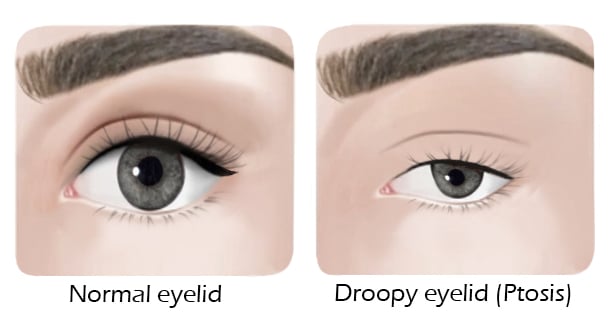
If the answer is ‘Yes’ to the above questions, you may be experiencing ptosis of the eyelids (droopy eyelids also known as Blepharoptosis).
What is ptosis?
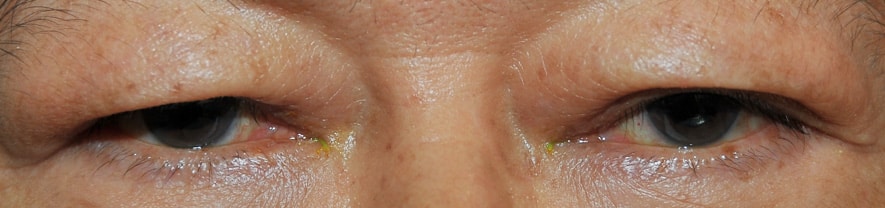
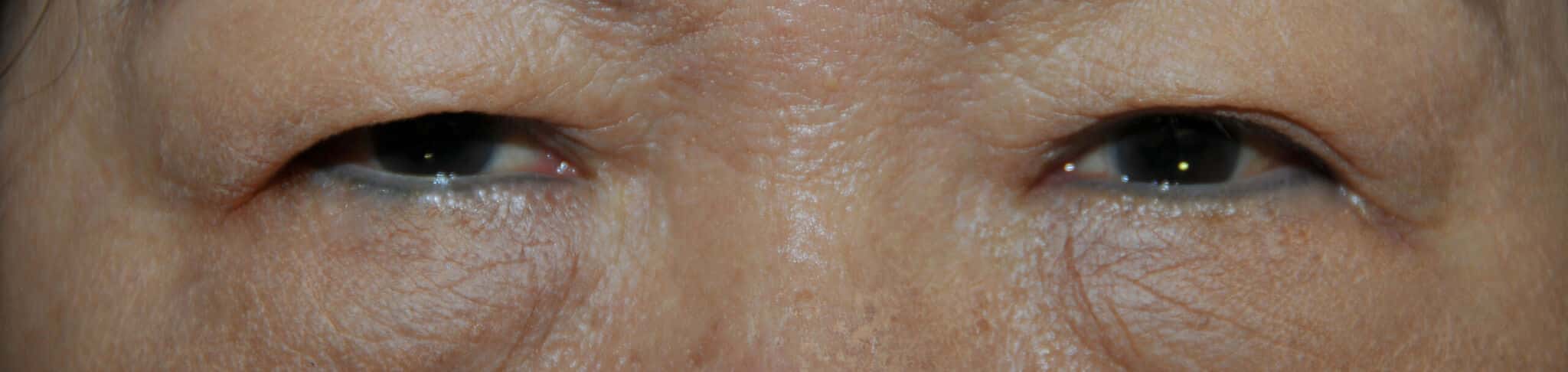
Ptosis is also known as droopy eyelid. It is the sagging of the upper eyelid (margin) position and it can be mild, moderate or severe.
Marginal reflex distance diagram
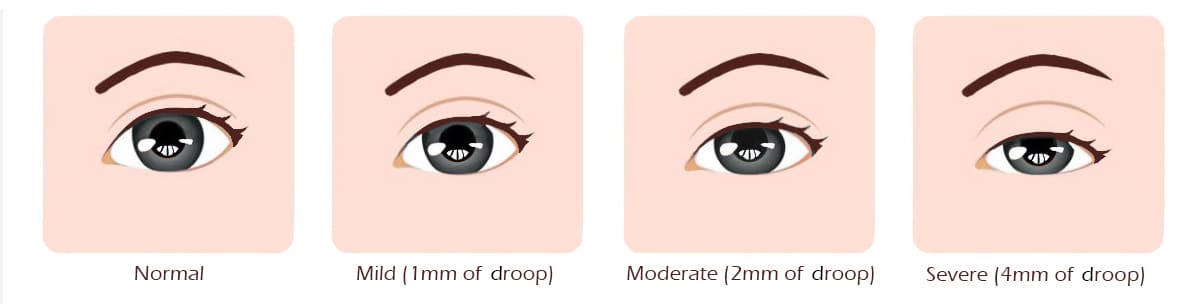
In moderate to severe ptosis, the eyelid covers some part of the pupil.
What are the symptoms of ptosis (droopy eyelid)?
- Vision is partially obstructed at the top part of your vision.
- Being told by someone that your eyes always look sleepy or tired.
- The eyes appear smaller than before.
- An involuntary compensatory mechanism by using the eye brow muscles to lift up the droopy eyelid often leads to tired sensation around the forehead area.
- Sometimes, headache results due to tension around the eyebrow and forehead muscles.
- In other words, you may not even realise that you have ptosis due to these involuntary mechanisms.
What are the causes of ptosis (droopy eyelid)?
The commonest cause of the droopy eyelid is that of:
- Aponeurotic ptosis, which is eyelid drooping due to an ageing/degenerative process of the eyelid’s supporting anatomical structures. Aponeurotic ptosis can also be caused by long-term contact lens wear, previous eye surgery or eyelid infections.
- Trauma from previous injury to the eyelid region, or even habitual vigorous eye rubbing.
- In some cases, one could have been born with ptosis (congenital ptosis).
- If there is a sudden occurrence, then it would be prudent to see your eye specialist urgently for further assessment to rule out more sinister causes such as a brain nerve compression or a nerve-muscle junction disorder.
Aponeurotic ptosis can involve one or both upper eyelids. Droopy eyelid is usually a gradual process if it is due to aponeurotic ptosis.
What is the treatment for ptosis (droopy eyelid)?
If you do have ptosis (droopy eyelid), you will likely benefit from ptosis (droopy eyelid) correction surgery. This is done as a day surgery procedure under moderate sedation.