
Eye floaters in Singapore: When are they harmless and when do you need treatment?
Eye floaters are common. As you grow older, you may notice an increasing number of floaters in your vision. Many people wonder if this increase in floaters is part of the natural aging process or if it signals a more serious eye condition.
Consulting an eye specialist in Singapore can help determine the cause of your floaters and ensure that you receive the appropriate treatment when necessary.
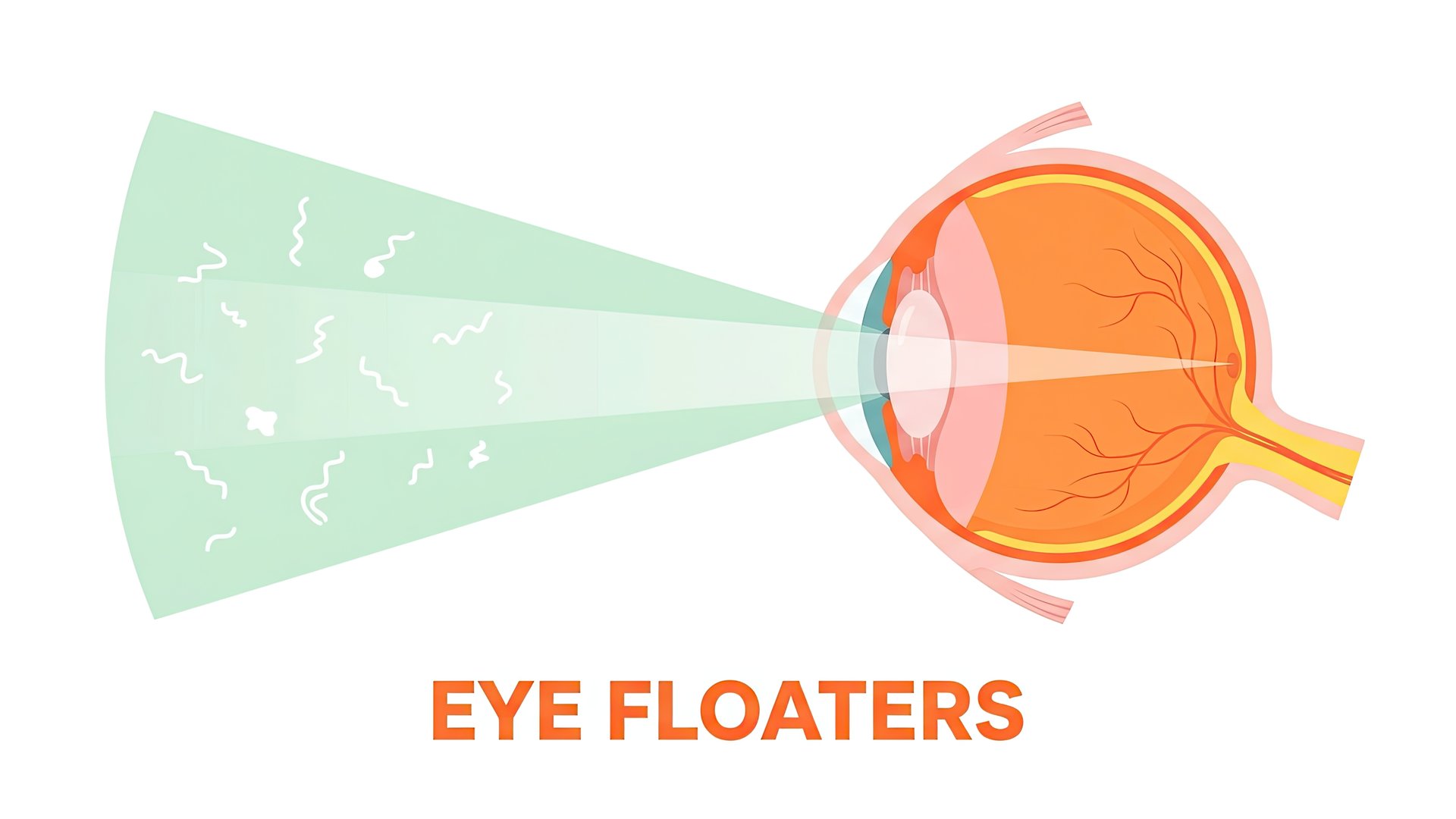
Table of Contents
- EYE FLOATERS IN SINGAPORE: WHAT IS NORMAL, WHAT IS NOT, AND WHEN TO ACT?
- WHAT ARE EYE FLOATERS AND WHY DO THEY APPEAR?
- FLOATERS THAT ARE USUALLY BENIGN: WHAT THEY LOOK LIKE
- FLOATERS THAT REQUIRE URGENT ASSESSMENT – TODAY, NOT NEXT WEEK
- THE CONNECTION BETWEEN FLOATERS AND RETINAL TEARS OR DETACHMENT
- WHAT FLOATER TREATMENT IN SINGAPORE INVOLVES
- LIVING WITH FLOATERS: PRACTICAL COPING STRATEGIES
- GET YOUR FLOATERS ASSESSED AT EYE MAX CENTRE
EYE FLOATERS IN SINGAPORE: WHAT IS NORMAL, WHAT IS NOT, AND WHEN TO ACT?
Although most floaters are harmless, a sudden change in the number may indicate an underlying retinal problem that requires urgent medical attention. A small quantity of stable floaters that develop gradually over time are usually considered normal. However, if floaters suddenly increase in number, or if a person experiences flashes of light or vision loss, it may indicate a retinal tear or retinal detachment. Consulting an eye specialist in Singapore can help determine the cause of your floaters and prevent your vision from worsening.
WHAT ARE EYE FLOATERS AND WHY DO THEY APPEAR?
Floaters are small dots, specks, or wavy lines that drift across your field of vision. They are called “floaters” because they appear to move whenever your eyes move.
In most cases, floaters are caused by age-related changes in the jelly-like vitreous gel inside the eye, causing tiny fibres to clump together and cast shadows on the retina. Other causes of floaters may include posterior vitreous detachment (PVD), eye injury or trauma, inflammation inside the eye, and retinal tears or retinal detachment.
FLOATERS THAT ARE USUALLY BENIGN: WHAT THEY LOOK LIKE
Eye floaters often appear as small dots, wavy lines, cobweb-like strands, or transparent rings drifting across your vision. Floaters are usually more noticeable when looking at a bright background, such as a clear sky or a white wall. In most cases, benign floaters have a gradual onset and remain stable in number over time. They do not significantly affect daily activities. As time passes, the brain gradually adapts to their presence, making them less noticeable and less bothersome.
FLOATERS THAT REQUIRE URGENT ASSESSMENT – TODAY, NOT NEXT WEEK
However, a sudden increase in new floaters, flashes of light, a dark shadow or curtain effect, or sudden blurring of vision should never be ignored, particularly if dozens or even hundreds of small black spots appear within a short period. This may indicate bleeding within the eye or a retinal tear or retinal detachment.
If you ever experience these symptoms, please do not delay. Visit a retinal specialist in Singapore immediately. Delaying assessment can significantly increase the risk of permanent vision loss. The National Eye Institute’s guidance on floaters and warning signs explains when urgent medical attention is needed.
THE CONNECTION BETWEEN FLOATERS AND RETINAL TEARS OR DETACHMENT
While most floaters are usually harmless, they can sometimes be an early sign of a retinal tear or retinal detachment.
Floaters can occur when the vitreous pulls on the retina, potentially causing a retinal tear or hole if the pulling is strong enough. If the tear allows fluid to pass underneath the retina, it can cause the retina to detach from the back of the eye. A sudden appearance of many floaters, sometimes accompanied by a curtain or dark shadow moving across the visual field, is a serious warning sign of retinal detachment, a sight-threatening emergency that requires immediate medical attention.
WHAT FLOATER TREATMENT IN SINGAPORE INVOLVES
Most eye floaters do not require treatment. However, if floaters significantly get in the way of your vision or daily activities, you may consider the available treatment options in Singapore.
Patients with large floaters that have well-defined borders and are located away from the retina may benefit from YAG laser Vitreolysis. This is a non-invasive procedure that uses nanosecond pulses to evaporate selected floaters, reducing their size or removing them altogether.
In more severe cases where floaters are persistent and severely disruptive, Vitrectomy surgery may be considered. During a Vitrectomy, the vitreous gel is removed and replaced with a gas bubble. Due to the surgical risks involved, this treatment is generally highly reserved for carefully selected patients.
Consult your eye specialist in Singapore to determine whether your eye floaters are suitable for treatment and which option is most appropriate for your condition.
LIVING WITH FLOATERS: PRACTICAL COPING STRATEGIES
Coping with eye floaters is the least invasive approach, as many people find that eye floaters become less bothersome over time and the brain gradually adapts to them. The following strategies may help reduce their impact on your daily activities:
- Move your eyes up and down or from side to side to shift the floaters away from your central vision.
- Use dark mode or dark themes on digital devices to reduce the glare from bright white backgrounds.
- Maintain comfortable indoor lighting by using ambient lamps instead of harsh, direct lighting.
- Wear polarised sunglasses outdoors to reduce glare and improve visual comfort.
GET YOUR FLOATERS ASSESSED AT EYE MAX CENTRE
Although eye floaters are often a normal part of the ageing process, they can sometimes be a sign of a more serious retinal condition. Even if you have had floaters for years, a sudden increase in number, size or the appearance of new floaters shall not be ignored. Without a detailed eye examination, it is difficult to distinguish between harmless floaters and those related to retinal tears or retinal detachment.
At Eye Max Centre, our experienced team provides comprehensive retinal assessments for patients experiencing eye floaters, flashes of light or other vision symptoms. Regular eye examinations with an eye specialist in Singapore are one of the most effective ways to protect your vision over the long term.
To schedule a cataract eye screening, please contact Eye Max Centre at +65 6694 1000 or manager@eyemax.sg.
