
Droopy eyelid surgery in Singapore: When is ptosis correction considered medical vs cosmetic?
A droopy upper eyelid can change how your eyes look, but ptosis is not always simply a cosmetic concern. In some people, the eyelid droops far enough to interfere with the upper field of vision, making activities such as reading, driving or looking upwards more difficult.
For this reason, droopy eyelid surgery in Singapore may be performed for medical reasons, cosmetic reasons, or sometimes a combination of both.
The first step is determining why the eyelid is drooping and whether it is affecting vision. A proper assessment also helps your surgeon decide which surgical technique is appropriate and whether additional eyelid procedures should be considered.
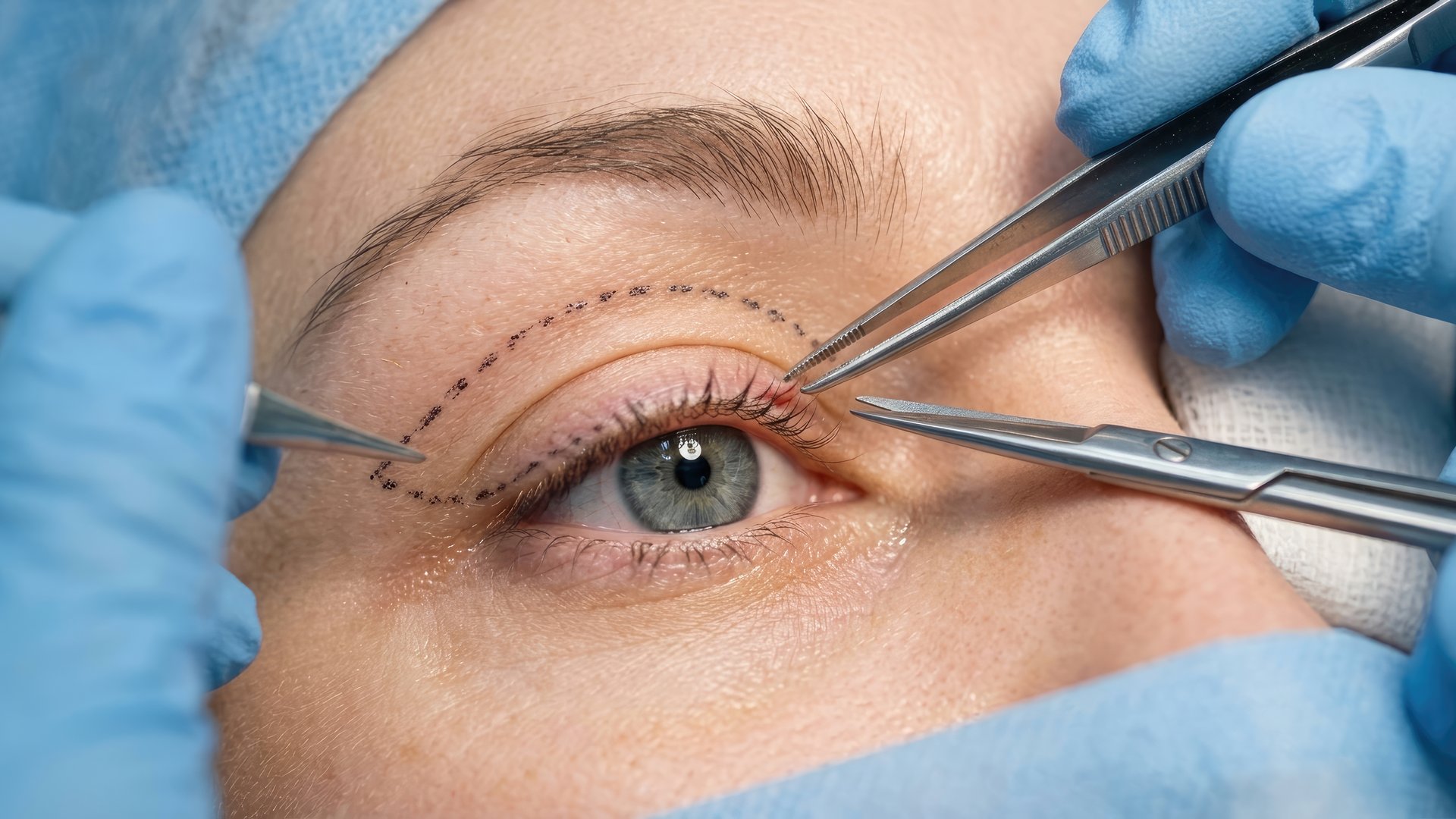
Table of Contents
- What causes a droopy eyelid (ptosis)?
- How your eye surgeon assesses whether your ptosis needs treatment
- Medical ptosis surgery: What it involves and who qualifies
- Cosmetic ptosis correction: Making tired-looking eyes appear more alert
- Can both be combined? Ptosis repair with blepharoplasty or double eyelid creation
- Droopy eyelid surgery cost in Singapore: What affects the price?
- MediSave and insurance for medically indicated ptosis surgery
- Recovery: What the first two weeks look like after ptosis surgery
- Book a ptosis assessment at Eye Max Centre
What causes a droopy eyelid (ptosis)?
Ptosis occurs when the upper eyelid sits lower than its normal position. It may affect one eye or both eyes, and the severity can range from subtle asymmetry to an eyelid that significantly obstructs vision.
The cause of ptosis is important because not every droopy eyelid should be treated in the same way.
Congenital ptosis vs age-related (involutional) ptosis
Congenital ptosis is present from birth or develops during childhood. It is commonly related to poor development or function of the muscle responsible for lifting the upper eyelid.
In adults, one of the more common forms is age-related, or involutional, ptosis. Over time, the tendon-like structure connecting the eyelid-lifting muscle to the eyelid can stretch or weaken.
This can cause the upper eyelid to gradually sit lower.
Long-term contact lens use, previous eye procedures and other factors may also be associated with certain forms of acquired ptosis.
Neurological causes: When ptosis is a warning sign
Not every droopy eyelid is caused by ageing.
Ptosis can occasionally be associated with neurological or muscular conditions affecting the nerves or muscles controlling the eyelid. Examples include third nerve palsy, Horner syndrome and myasthenia gravis.
A new or suddenly drooping eyelid therefore deserves medical attention, particularly if it occurs with double vision, changes in pupil size, eye-movement problems, weakness or other new neurological symptoms.
In these situations, identifying the underlying cause takes priority over planning ptosis correction in Singapore.
How your eye surgeon assesses whether your ptosis needs treatment
A ptosis assessment involves considerably more than deciding whether one eyelid looks lower than the other.
Your surgeon will examine eyelid position, symmetry, muscle function and the overall health of your eyes. Measurements can help determine the severity and type of ptosis and guide the choice of treatment.
Visual field testing: When the eyelid obstructs vision
Visual field testing can assess whether a drooping eyelid is interfering with your field of vision.
In medically significant cases, the upper eyelid may block part of the superior visual field. Testing may help objectively document this functional impairment.
These findings can also be relevant when determining whether ptosis surgery in Singapore is considered medically indicated rather than primarily cosmetic.
The margin-reflex distance: A key clinical measurement
Margin-reflex distance, commonly abbreviated as MRD, is one of the measurements used during a ptosis assessment.
It assesses the relationship between a light reflex on the eye and the position of the upper eyelid margin. Your surgeon may consider this alongside levator muscle function, eyelid crease position, visual field findings and other measurements.
No single measurement should be interpreted by itself. The overall clinical picture determines whether treatment is appropriate and which procedure may be suitable.
Medical ptosis surgery: What it involves and who qualifies
When ptosis significantly interferes with vision or everyday function, surgery may be medically indicated.
The surgical technique depends on the cause of the ptosis and how well the eyelid-lifting muscle functions. In suitable cases, surgery may involve adjusting or tightening the levator muscle or its associated structures to raise the eyelid.
Other techniques may be required when eyelid muscle function is poor.
The goal of medically indicated droopy eyelid surgery in Singapore is primarily to improve eyelid position and reduce functional visual obstruction.
Eligibility for medical treatment, insurance claims or subsidies should not be assumed solely because a patient has been diagnosed with ptosis. Objective clinical findings and the applicable payer requirements may need to be satisfied.
Cosmetic ptosis correction: Making tired-looking eyes appear more alert
Milder ptosis may not significantly obstruct vision but can still affect facial appearance.
One eyelid may appear lower than the other, or both eyes may appear less open. Some people describe this as looking tired even when they are well rested.
In these situations, ptosis correction in Singapore may be performed primarily for cosmetic reasons.
Cosmetic surgery still requires careful medical assessment. Raising an eyelid too much can affect eyelid closure, symmetry and the ocular surface, so the goal is not simply to make the eye appear as large as possible.
Your surgeon should discuss realistic expectations, natural asymmetry and the limitations of surgery before treatment.
Can both be combined? Ptosis repair with blepharoplasty or double eyelid creation
Yes. In selected patients, ptosis repair may be combined with other eyelid procedures.
For example, someone may have both functional ptosis and excess upper-eyelid skin. Ptosis repair can address the eyelid-lifting mechanism, while upper blepharoplasty addresses excess skin.
In suitable patients, ptosis correction may also be planned alongside double-eyelid crease creation or adjustment.
However, the medical and cosmetic components should be clearly distinguished. Combining procedures does not automatically make the cosmetic portion medically necessary or insurance claimable.
Your surgeon can explain which parts of the proposed eye surgery in Singapore are intended to improve function and which are intended primarily to change appearance.
Droopy eyelid surgery cost in Singapore: What affects the price?
There is no single droopy eyelid surgery cost in Singapore that applies to every individual.
The final cost depends on the complexity of the condition, surgical technique, whether one or both eyelids require treatment, operating facility, anaesthesia requirements and whether additional procedures are performed.
A clinical assessment is usually necessary before an accurate quotation can be provided.
Medical vs cosmetic billing differences
Medical and cosmetic ptosis procedures may be billed differently.
If surgery is performed primarily for appearance and does not meet the requirements for medically necessary treatment, you should generally expect to pay for the procedure themselves.
Where ptosis is functionally significant, insurance or MediSave eligibility may be considered subject to the applicable criteria and documentation.
Those combining medical ptosis repair with a cosmetic procedure should request a clear breakdown of the charges.
Unilateral vs bilateral procedure
Ptosis can affect one eyelid more noticeably than the other.
A unilateral procedure treats one side, while bilateral surgery treats both eyelids. This can influence the complexity and cost of surgery.
Interestingly, eyelid position can sometimes change on the opposite side after one eyelid is lifted because of the neurological relationship between the two eyelids. Your surgeon will therefore assess both sides even when only one appears obviously droopy.
MediSave and insurance for medically indicated ptosis surgery
MediSave and insurance coverage depend on whether the procedure meets the relevant criteria for medical necessity, as well as prevailing claim rules and the terms of an individual insurance policy.
Clinical documentation may include measurements, photographs, examination findings and visual field testing where appropriate.
Cosmetic eyelid surgery is generally treated differently from medically necessary surgery and should not be assumed to be claimable.
Before proceeding with ptosis surgery in Singapore, ask the clinic for financial counselling and, where applicable, confirmation of insurance pre-authorisation and estimated out-of-pocket costs.
Recovery: What the first two weeks look like after ptosis surgery
Recovery varies according to the type and extent of surgery.
During the first several days, swelling, bruising, tightness and temporary asymmetry can occur. The eyelids may initially look different from their final position because the tissues are still healing.
Your surgeon may prescribe medication and provide instructions on wound care, eye lubrication and activities to avoid.
Swelling and bruising generally improve progressively during the first one to two weeks, although complete healing and final eyelid positioning take longer.
You should attend their scheduled post-operative reviews so the surgeon can monitor eyelid position, wound healing and eye-surface health.
Seek medical attention promptly if you experience severe or increasing pain, significant deterioration in vision, marked swelling or another unexpected change following surgery.
Book a ptosis assessment at Eye Max Centre
If one or both upper eyelids appear increasingly droopy, an assessment can help determine whether the issue is cosmetic, functional or related to another medical condition.
At Eye Max Centre, a ptosis assessment can evaluate eyelid position, muscle function, symmetry and whether the eyelid is interfering with your visual field.
Where treatment is appropriate, your surgeon can discuss the available options for ptosis correction in Singapore, including whether the procedure is primarily medical, cosmetic or a combination of both.
Patients considering droopy eyelid surgery in Singapore can also receive an individualised estimate of the expected droopy eyelid surgery cost in Singapore after the required assessment.
The most appropriate treatment should ultimately address more than appearance alone. It should also take into account your vision, eyelid function, eye health and desired outcome.
To schedule an appointment, please contact us at +65 6694 1000 or manager@eyemax.sg.
